How Leaders Fail Returning Moms | Alexa Starks
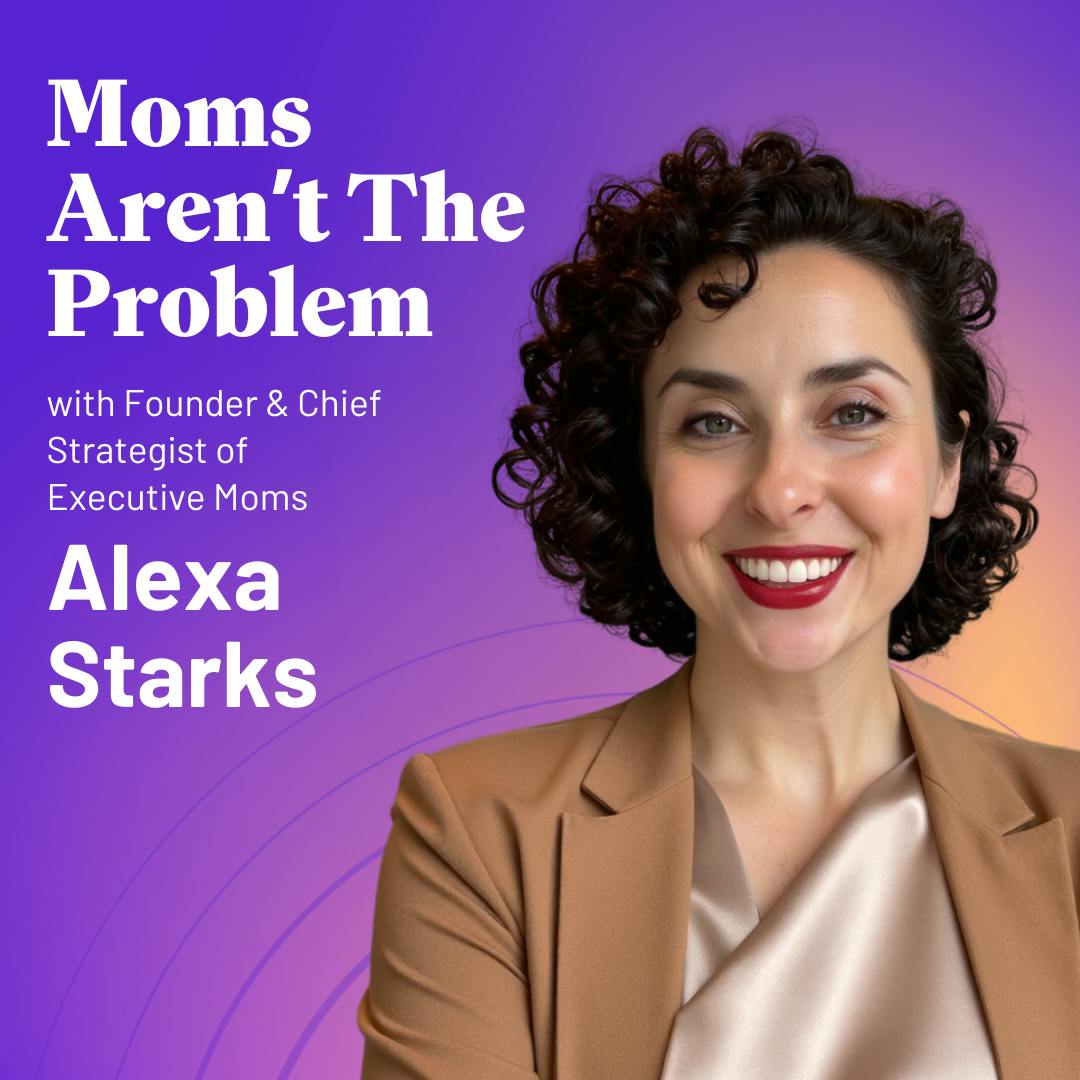


Reentry Isn’t a Moment—It’s a System: Designing Support That Works with Alexa Starks
What if “welcome back” wasn’t the plan—just the starting line?
In this episode of Human Side Up, host Natasha Nuytten sits down with Alexa Starks—Founder & Chief Strategist of Executive Moms and host of The Reentry Room—to unpack how organizations can move beyond good intentions to build practical, repeatable frameworks that retain high-performing parents. Drawing from her own return-to-work experience and a decade in corporate ops, Alexa explains the “reentry gap,” why so many managers default to silence, and how leaders can co-create 30/60/90 re-onboarding plans that adjust goals, measure output (not hours), and make flexibility real. They get specific on scripts and shared language for managers and parents, weekly capacity check-ins, resetting OKRs, and the difference between policy and practice when it comes to boundaries. While the focus is parent reentry, the lessons apply across life events—because compassionate leadership and clear expectations improve outcomes for everyone.
Highlights & Takeaways
💡Reentry is a process, not a date: co-create 30/60/90 plans and reset OKRs
💡Measure output, not “green dots”: flexibility that’s tied to clear goals
💡Policy vs. practice: manager behavior is the culture
💡Shared language: scripts for managers and parents to ask for—and offer—support
💡Beyond parenthood: compassion + clarity build stronger teams in any life event
Human Side Up
What happens when we stop following the playbook and start writing our own? Hosted by Natasha Nuytten, CEO of CLARA, Human Side Up cuts through the noise to reveal how real leaders create workplaces—and lives—where people can thrive.
Connect with Natasha:
🎧 Spotify
📺 YouTube
Connect with CLARA:
🌐 Website
📺 YouTube
Test
Natasha Nuytten: Welcome to Human Side Up, where we explore the deeply human side of leadership. I am your host, Natasha Nuytten, the CEO of Clara. Today, I am joined on the podcast by Alexa Starks. She is the founder and chief strategist of Executive Moms and the host of the podcast, The Re-Entry Room. Alexa has turned her own personal experience with the re-entry gap into a mission-driven movement that's really reshaping how companies support working parents returning to the workforce. It has often been said, and I say it a lot myself, that those closest to the problem can offer some of the best solutions because they know the problem the best. Alexa came to this work from her own personal experience. As a working mother of two toddlers, she has a strategic background, but she encountered those broken systems that really demand seamless rebounding, reframing, hurry up and get back to it from new parents. Those systems were built on expectations rather than empathy, and as she encountered them, instead of just adapting and doing what was expected, she decided to fix them. Through Executive Moms, Alexa helps organizations design what she calls re-entry blueprints that help move beyond just, hey, welcome back to we see you, we're ready for you, and we want you to grow here. Her work really addresses what she calls the silent middle, that space between survival and success that so many people get stuck in. Today, we'll explore the opportunities that we as leaders have to shift from making well-intentioned, but often ineffectual efforts at support to building really practical frameworks that help actually retain high-performing talent and high-performing parents. Whether you're designing policies, managing returning team members, or navigating your own re-entry journey, this conversation will provide you with some concrete examples of how you can create workplaces that truly support working parents. Welcome to Human Side Up. Thank you for joining me today.
Alexa Starks: Thank you for having me. I'm excited to be here.
Natasha Nuytten: Absolutely. So we start our podcast by asking everyone of our guests as a starting place. What are one or two things, maybe three, up to you, attributes that you would use to describe yourself that we might not see on a resume or a CV that are pretty core and fundamental to who you are? And when did you start to own them as true about yourself?
Alexa Starks: Attributes. I would probably go with resilience and patience. This all boils down to motherhood. I can't tell you how much patience you need to write out your toddler's tantrums all day, multiple times a day. And the resilience to get through those newborn sleep deprivation days, which turn into weeks and months and regressions, and you still have to function during the day somehow and do your job and you have to power through. And so I would definitely say resilience and patience.
Natasha Nuytten: Resilience and patience. Yeah.
Alexa Starks: Which I would not have called myself a patient person years ago. I would probably have said the opposite, that I'm impatient.
Natasha Nuytten: Motherhood changes you, right? There is definitely truth in the way that your brain is wired differently when all of that happens. So given that, I would like to, I want to talk a little bit about how you're working and how you've come, about your work and how you've come to it. Can you give us just a little bit of your background before starting Executive Moms and doing the work that you're doing now? How did you, how are you walking through the professional world before you became a founder and CEO? Yeah.
Alexa Starks: So I've spent a little more than 10 years in corporate America. I did advertising and strategic operations and got my master's degree in organizational leadership. And I led a team of advertising operations experts. And so I spent a long time doing that and loving it. And I had this whole vision for my career. I was going to work my way up the ladder and really loved being a leader and a people manager and empowering my team. And one of my favorite things was getting to grow my team's skills and watching them grow. And then I became a mom and I just had two bad returns from maternity leave experiences with no support. And both my managers, two different managers, they just, they didn't know what to say. And so it was just silence. And I didn't know what to say to advocate for myself either. And it just wasn't, I ended up leaving corporate America and started my business. And it was something that was needed. So now I bring corporate workshops, train managers and literally support working moms and parents returning from leave. It's the program that I wish I had because there's so many moms, like one in three moms quit their jobs after having a baby, within a year of having the baby. And that's a lot. It's a very high number. And so it's just, there's so many other women and I myself had such aspirations for climbing up the corporate ladder and ended up getting pushed out.
Natasha Nuytten: Yeah. What was it about the sort of system, right? Or what you were returning to felt like, yeah, I can't do this or I don't want to do this maybe more specifically that made you really think I need to come up with something different here and a solution.
Alexa Starks: Yeah, it was a few things. One, so I worked remotely, which is fortunate. I got to have my baby home with me and I didn't have to put both of them in daycare right away which is not the case for many women. But when you have a baby and you have them at home, now it's this juggle of juggling my baby and work. And I would be the first one working at 6 a.m. when she was napping and late into the evening. So it was never a matter of could I get the work done? But it's this bias, this assumption that you can't handle your workload now because you have conflicting priorities. And I saw this all the time. I kept asking for promotions. I kept asking for additional projects and they got handed to other people. And so it's this systemic issue that managers don't know what to say or they don't want to say the wrong thing. And so they end up not saying anything at all. And there's no support for, hey, I need a flexible work environment. Can I, instead of nine to five, can I chunk some of my work out in the morning first thing when I'm up at 6 a.m. And I'm available during these times but maybe not taking meetings from four to six because I'm with my kids. And so the need for flexibility is something that's really beneficial for parents so that you have a life outside of work, your kids. And teaching training managers to overcome that assumption that now that you have a conflicting priority of a baby, that you can still handle your workload and how to measure output instead of hours worked in a day.
Natasha Nuytten: Yeah, I think that really is the key because the reality is like, when you are a new parent, you do have conflicting priorities. Like all of a sudden, this little human or multiple humans, however, they are more important than the work that you're doing. And so it's not untrue, but it doesn't necessarily mean that you cannot still do the work that you have been asked to do. And so I think that's definitely what I want to unpack because I do think there's this, I think part, one of the frictions in this particular area, there are many, and hopefully we'll unpack all of those today. But I do think one of the frictions is sometimes it's hard to move someone who has not had that experience, right? To move them from, the reality is, yes, my world is different. I am a different human being. I do have different priorities. I maybe am not gonna answer your text message immediately at three o'clock in the morning when you send it to me, but that doesn't mean that I cannot still do my job and deliver the things that you need me to do that are valuable. But it is, if you haven't been in those shoes, it can be very difficult to understand that it's a, it's difficult, I think, for many human beings, especially in Western cultures to hold two different things that feel disparate. It is a both and versus an or. And so getting organizations over that line can be really challenging. So I really appreciate that because there is change. Like we'd be stupid not to acknowledge that. And it doesn't mean that you can't still get what you need and that I cannot still deliver what it is you need me to deliver. So that's- Absolutely.
Alexa Starks: And I think you touched on a really good point that also when you come back from maternity leave, let's say you get three months off, right? When you come back first, you're not gonna be at 100% capacity what you were doing before your baby right away. It's gonna take you some time to adjust to managing both mom's life and working again and get back up to that capacity. And so that's what I think managers also have to reset their expectations that you're not back from a vacation. You have this massive transition that you have to adjust to, including sometimes you've got postpartum mental health issues. Maybe you've got like a sick baby that you have to adjust with. And so there's a lot going on. And so it's resetting this manager's expectation of being at 100% on day two, basically.
Natasha Nuytten: Yeah, I think that is a really great point. We'll definitely double click on that. And I wanna say as we're talking today, just so we're all the listeners and you and I are aligned, re-entry is a term in HR that is used for many different groups of people, right? Returning from an absence for a lot of different reasons. Health or maybe even being justice impacted or caretaking versus parenthood. So just understanding that while parenthood is a very specific experience, uniquely specific, if I could use that combination of words, that is what we're talking about today. But many of the things that we will be talking about that are sort of family friendly policies, if you will, or caretaker human policies can translate to some of those other groups of humans who maybe are out of the workforce and coming back for different reasons, but they are still applicable because no matter if you have kids or not, life is still happening outside of work. And so things are happening. Your other family, your friends, the people that are chosen in your world that you care for have things happening. So just to, so we're all on the same page there. Is there anything you would add to that or change about that?
Alexa Starks: Yes, a million things, but I love that you brought that up because I just was talking about this on LinkedIn today, yesterday, both days, I don't know. It's that one of the ripple effects of this workshop is that when you train a manager how to lead with compassion or empathy or support and understanding, you create a culture that supports everyone and every employee because everyone's eventually going to go through a challenge in life, like aging parents that you have to care for or your own mental health issues or your own health issue. There's a million things that happen in life and having a supportive manager who knows how to say, hey, what can I do right now so that you can have the time you need to take care of yourself or what do you need from me? And having that supportive, compassionate communication where you feel safe to go to your manager as well, that benefits every employee. So I love that you brought that up. So I was just talking about that today. Good.
Natasha Nuytten: So one of the phrases that you have used is the sort of re-entry gap and it's really that unspoken chasm that parents, mothers particularly, but parents experience when they're returning back to work. And I know that was a catalyst for you to launch Executive Moms. You've talked about there being really poor transitions in both instances with your two littles and coming back to the workforce. Can you take us back just a little bit and talk a little bit about that, a little bit more about that re-entry? What were the challenges? What were the things that maybe you needed that you weren't getting? And the reason why I ask this is not to point fingers at anybody or to create a picture of negativity anywhere that you've worked, but really to think about what it revealed to you about the system and the challenges that felt to you like, okay, this needs to be something that we change.
Alexa Starks: Yeah, absolutely. So with my first maternity leave, and my first boss, he didn't say anything, which is in some respect, not the worst, but it's also not the best response. So there was just this assumption that I'd be back up to normal on day two and I could take back on my full workload on day two or day one. And I also didn't have the words to say, hey, this is a lot right now. Can I slow roll it back in? Can we sit? Can I just take on one of my projects back and readjust in the coming weeks? And then with my daughter, my second, she had really bad reflux. And there'd be so many times I'd have to hop off a meeting because she just projectile threw up across the living room or she'd be crying while I was trying to feed her and I would be crying and I'd have to then try to put her down and hand her to my husband. And I'd hop on a meeting, visibly just crying and covered in puke from here down off camera. And my manager didn't say anything, but it was obvious that I was struggling. And so that was, and I don't falter for that because that's a very uncomfortable thing to say. How do you know what to say? And so they just don't say anything. And two, I also didn't know what to say. I was, it was three, four months back. I didn't have the words to advocate for myself and say what I needed to say either. I didn't know how to ask for flexibility. I didn't know how to ask to say, can I push non-essential meetings to next week? Or can you take notes at that meeting? Just send the email. I'll just read the email recap. I can't attend that one. And so I didn't have those words either. And so it's that shared language that I think has really been one of the biggest benefits of this workshop is that co-accountability of here's the managers, here's the scripts, the language that you can use and working moms, working parents, here's the language that you can use to advocate for yourself so that you know when you go to your boss to say, here's what I need for support. Here's what I'm struggling with. They know how to respond and vice versa. And that was really born out of my own struggle with that.
Natasha Nuytten: Yeah, I really appreciate that. It was actually something that I've been thinking a lot about in thinking about our conversation. There's really two sides to this, right? There's on the one hand, there's the organizations that need to do better, right? There are things, there are policies, there's training, there's just, yeah. I say training, but like just educating people around familiarity with the situation, but also then building in some safeguards. And at the same time, going back to that, two things being true, we also need to own for ourselves that we can't have, while we would want to work someplace where it is expected that we're as a human being, we're seen and valued. And this person across the table knows us well enough that's just not realistic in every organization or even more specifically, there's like a range of that happening, right? And so it's not that, I do believe that like at the end of the day, while things feel bananas right now, I do think that most of us feel like we're trying to do our best, right? Even if it isn't necessarily how I would think the best should be done, we are trying to do our best. And so there is something that needs to be on us as an individual, whether we're re-entering because we're a new parent or we're re-entering for some other reason to be able to own our own piece of, hey, I'm struggling, here's what I need. And yes, it is very difficult to do that if you're in an organization where it's not safe to say that or you don't feel like you can say that in our policies. And at the same time, that self-awareness of what I need and what is good for me in the moment, what I can deliver is also really critical. So it's hard. I know that a lot of people are gonna push back on both sides of that, right? Some people are gonna be like, no, you know what? Businesses just need to be better. They need to see people as whole people. Plus one, you're totally right. They should. And there are gonna be people on the other side of that fence who are gonna be like, yeah, this is a business. I'm not your best friend. I'm not your Girl Scout leader or whatever. Like you need to do your job. And there is that, but like the reality is if we can all come together and be humans, everybody wins on the other side of that. So I really appreciate that there are both sides of that. So in thinking about that, as we move forward, let's spend a little bit of time thinking about leaders and orgs and what they can do. And then we'll maybe shift gears and think about as an individual who is reentering for whatever reason, here's what you need to be thinking about and how you might advocate for yourself. Will that work for you? Absolutely. Awesome. Okay. So one of the things that I noticed that you have said a lot and you write a lot about is that reentry isn't a moment, it's a process, right? And it's very true. I actually sit on the organization of a board that works with folks who are reentering after being justice impacted. And it is a process, right? There is a moment where you've walked outside and you were a free human. Ironically, it is exactly the opposite. You're walking inside, you're going, oh my God, what's happening? Anyway, there is a moment where there is a transition, where a thing has happened, but it is the bookends of the situation that are very real. So in thinking about that process, I'm curious when you think about that system and how it's broken and you're working with organizations to really audit their return to work policies. What are, let's start with something like the biggest systemic failures that you have seen that leaders think are actually supportive, but in actuality are creating barriers for people to be able to reenter and do the work that's needed to be done?
Alexa Starks: That's a great question. I think the first thing is reassessing any OKRs or goals that you've set, maybe before leaving and now you need to readjust. And I know, I think we talked about part of the workshop is co-creating a 30, 60, 90 day re-onboarding plan. And part of that is readjusting your goals as needed. Because if you were expected to hit a sales number or quota, 30 days back from leave, that might not happen. And you might burn out really quickly trying to do that and struggle. And so readjusting goals has been a huge thing. And most companies don't even think to do that because that's just not... Who thinks of that? And that's fair. And so readjusting those goals is probably one of the first things that...
Alexa Starks: should be happening to reset that.
Natasha Nuytten: If you are trying to be, again, like if I'm trying to do my best as a, let's talk about, we'll say manager, and we do have these OKRs, like there's also this, there's a little bit of a, like just practically speaking on the other side of the human coin is I don't want to assume you can't do your job. I don't want to lower the bar because I also don't want to offend you, oh, you're a new dad or you're a new mom and you can't do your job, so I'm going to lower my expectations for you, right? There can be a little bit of it that feels like maybe I'm selling you short in that regard. So I think to your point, like about, we might need to adjust those expectations. It really requires dialogue, right? And that needs to be done before someone leaves, I think. So that there's not a, hey, we didn't have this conversation before you left, and so all of a sudden, I don't know what to say to you. So I'm just, to the point you were saying earlier, didn't say anything, right? That's not going to help either. We're just going to do the status quo and I'm not going to make any assumptions, but like talking about there might be some changes and we might need to make some adjustments here on both sides of this, right?
Alexa Starks: Yeah, absolutely. Having that open communication is so important because this week might be a hard week. These two weeks might be a hard week, but the week after might be full speed ahead and it's going to be very different for every person. And so that's why it's so important to co-create that with your boss and the working parent and check in weekly. Part of what I advise on is set weekly check-ins to see how your workload, your capacity is, because you might be able to take on more. And if you don't speak up, your boss isn't going to know that and when you make assumptions, you make an ass out of everybody, right? Yes. Making sure that you are asking your employee, hey, how is your workload capacity? How are you doing with the work that you have right now? Do you want to take on more? Is it not enough? Is it too much? And we can adjust as needed. And so that is so important is that open communication and the safe space to say this week's too much. And then in a month that might change.
Natasha Nuytten: So I want to double click on this, but I'm going to get back to what some of the other sort of systemic failures that you've seen might be. So playing, what is a better way to say devil's advocate? I don't know, just like to challenge that a little bit and to say, okay, let's think this through. When is it okay? Like when and where is the line between we're making accommodations along the way and we do this for a month, we do this for two months, we do this for three months. Like I'm thinking of someone that I've worked with. I won't be specific about when, who was going through a lot of familial changes and very open about the challenges that were happening. Hey, I'm taking on this other stuff. I think I'm a fairly supportive leader, but we could talk to my team about that, but I think, and so we made a lot of accommodations. Hey, yeah, miss these meetings if you need to miss them, like no big deal, they're recorded, you can come back to them. As long as stuff is getting done, that's no problem. And this person was also in a leadership role, right? And so there's an expectation like, okay, now we're three months in and we're having this conversation. You said it might be a month or two, it's three months. We talk every week. So it's not like we're not having open communication. We've laid out the expectations. There's been a certain amount of like, when can I expect that you are gonna ramp back up because we do have expectations for this role. So now we're six months in, right? And so I'm just thinking as a manager on the other side of that, there are certain things that I'm now held to, right? And I need to have conversations with you about what that output or delivery is, or if you don't have to show up, how do I expect that Natasha's gonna show up if you are, right? And so there's these things that managers are thinking about. So how do you advise companies to think through that sort of shift in timeline? Some people's timelines are, yeah, three months, I'm back at it and that's great. Some people it's a man, my little nugget has a whole lot of stuff going on and it's a year before I can get back into that role given that we don't live in one of the Scandinavian countries where you get three years off to have the baby and bring them into the world. How do you advise managers in that capacity or companies in that capacity around this could take some time, right? And how do we set that expectation even outside of you having regular one-on-one?
Alexa Starks: Yeah, that's a really good question. I think the first is making sure that you're setting, you're really clear with the expectations and how much they need to be, what the output is you're looking for and is making sure it's quantitative, right? Like you are measuring, this was your goal that we needed to hit, sure, it's adjusted for your first 30 days, 60 days, it's adjusted back and let's say they're not meeting it. Consistently not meeting, you're adjusted and you've talked to them. So all of that, I would say see if there's a way if they might wanna drop part-time work, right? Sometimes companies are open to turning it into a part-time role or dropping you to a fractional role, fractional hire for that role. Otherwise, if it's just not working out for six months, it's okay that it's just not working out if you've really bent over backwards for them. And they're also aware that they haven't met your agreed upon expectations and goals and output and you've done everything right as a manager and they've done everything that they could and just aren't able to work and take care of their baby, that happens, it happens all the time that their baby is just, it's too much and they can't work full-time and take care of their baby. So- Yeah,
Natasha Nuytten: clear is kind, right? Let's get on the same page and then we can have a conversation thereafter. So yeah, I think that's good. Okay, so that's one, is like one sort of systemic thing that people often get wrong is expectations, right? And being clear about what they are. Are there others that you think are fairly consistently done poorly?
Alexa Starks: Yeah, it's probably the hours worked and butts in seats if you're not available, green lights on Slack or Teams or whatever, nine to five all day basically, this assumption that, again, you've got conflicted priorities, which you do, but you may be working from seven to nine during baby's first nap. You may be working seven to 10 p.m. to catch up on any work that you missed. And it all adds up to probably well more than eight hours. And, but it's this assumption that if you're not green light during those working hours, that you're not doing your job well enough. And so that's, I, that's why I advocate for flexible work environments and flexible time. So you're not measuring butts in seats, but again, you're measuring output. And are they meeting your agreed upon goals and output and expectations?
Natasha Nuytten: Yeah, that's great. Okay, so expectations, and really having the flexibility to work is delivering back to those expectations. Are there any other, like maybe more along the lines of policy or benefits that is hindering?
Alexa Starks: At the end of the day, a company's maternity or paternity leave policy is what it is. I'm not trying to change that. If they offer six weeks or 12 weeks or 16 weeks, it is what it is. I can obviously highly recommend they do more than six weeks, but I'm not trying to change that. And I have adjusted my workshop based on oh, they only offer eight weeks or 10 weeks instead of 12 weeks, 16 weeks. You have a different baby at six weeks than you do at 16 weeks. And so you are going through different experiences at six weeks versus if you return at 16 weeks. So yeah, their policy is what it is.
Natasha Nuytten: Yeah, no, that's fair. Okay, so when you are doing your workshop, you've talked a lot about the need for companies to really move away from saying, hey, welcome back to, we see you, we're ready for you, we want you to grow here, we're willing to work with you, right? And you have a, you've talked about your workshop and it's really a four-step re-entry blueprint, if you will, to push organizations past those sort of platitudes, this is what we do on paper versus actual structural change that does those things of we see you, we want you to grow with you. So walk us through a little bit about what that looks like in practice. How do you help companies avoid just adopting those symbolic programs? How do we help them, how do you help them develop more empathy in their policies, culture every day? And so I'm really asking these questions, if I'm a VP of people operations and I'm listening to this conversation, what should they be implementing, maybe even before someone goes on leave that could help them re-enter in a smoother, more successful kind of matter? What does really quote-unquote being ready actually look like?
Alexa Starks: Yeah, I love that because that's the first part of the four-part framework is aligning on expectations before you go on leave, aligning on, am I coming back to a flexible work environment, right? Am I hybrid or am I fully remote? Am I doing, one day in the office or sometimes people do a phased return where you only work like three or four days out of the week back. So aligning on what you are expected to come back to before you even go on leave. And then I always have them, I always recommend a check-in with your manager maybe two weeks before they come back, just a quick chat, because who knows what has happened in those three months? And it's just like a quick, hey, everything's still in place, we're still excited to see you. Or it's hey, we did a big reorg, here's a brief summary, I'm gonna take you through it when we get back, but just a heads up, right? And so it's a quick heads up expectation reset as well. And so there is that whole like free actual return part of the framework. Okay. And that has been really helpful as well.
Natasha Nuytten: Okay. So what are steps two, three, and four? We have this conversation. That's great. We're aligned before you leave. What do we need to do next?
Alexa Starks: Yeah, so steps two, three, and four, it's, I'm trying not to give all my trade secrets away, but it's the first 30 days, and then the next 30 days, and then the last 30 days. And so part of that is co-creating a 30, 60, 90 day plan, readjusting your goals with each month and your expectations of workload, capacity, what you wanna do. And the last part of it is readjusting your career growth, your career map, your goals. Some women have way more ambition when they become a mom and come back to work. Like myself, I was way more ambitious after having kids. And I wanted to take on bigger, high visibility projects. And I was trying to say that, and it just never got to that point, right? And some women on the other side of that don't want to, and they're comfortable where they are. And so at the end, once you ramp back up around three months after returning from leave, you have that conversation of resetting your goals, your career outline that you have with your manager so that you can make sure that you're getting those projects, you are getting visible, you're picking up more work and realigning to any promotion that you were trying to get onto. And then in the workshop, it's very hands-on interactive. And I actually, I know you talked about braining empathy is a very difficult thing to do. A lot of people won't fully understand what this feels like as a working mom, if you've never been a working mom. And that's fair, I'm not trying to get a man who's never had kids to understand what I'm going through, but it's about leading with compassion. And I know I've said that. And so the workshop is very hands-on and takes you through different scenarios and gets you to practice what you can say that is helpful and in different examples so that you actually have practice of what to say. It's not just like lecturing at you for three hours.
Natasha Nuytten: That's good. Nobody loves to be lectured for three hours, right? Yeah. Thinking about that, when you're training or working with a company, is one thing for leadership, and by leadership, senior leadership to have an expectation for them to function in a particular way. But the reality is that in an organization where there are more than 50 people, which is most companies, right? A good portion of them, let's say that. There are actually quite a lot of small companies in this country, which is great, good for them. There is a reality that managers play a really significant role in how policy is executed. So when you're doing your training, it's one thing for an organization to say, hey, we have these really work-friendly policies, these family-friendly policies, and how they get played out day-to-day. Can you talk a little bit about what disconnects between what the policies are and how they're executed?
Alexa Starks: Yeah, in terms of policy, if they say they have flexible work or they say they support working parents, it, you talk about managers modeling behavior. That's culture. What the managers do becomes a culture. So if you, as a working parent, say, hey, I'm blocking my calendar after five o'clock or 4.30 to pick up my kids from daycare, but your manager is slacking on you at 5.30, six o'clock hey, can you hop on a call? They're saying your boundary doesn't matter to me. I'm still working. I expect you to work. I'm messaging you. And that's hurting that culture, that policy, that family-friendly work environment that you're trying to create and say that, hey, if you need to take off for daycare, finish back up at work, after kids go to sleep, totally cool, but then if your manager is doing otherwise, that's the disconnect. And so part of the workshop is training managers about that awareness. Sometimes they don't know. They don't know that they create that culture, that environment. And because most companies don't have manager training. They don't know that their behavior sets the expectation. And so it's getting leaders to also set those healthy boundaries, healthy examples of not sending out Slack messages at 8 p.m. expecting your employees to respond to you. That's not healthy.
Natasha Nuytten: Can I double-click on that for just a second? Yeah. Because if we're making accommodation for someone who isn't working at that time, shouldn't we also be making accommodation for someone who is at their best time to work?
Alexa Starks: They absolutely can, but they shouldn't expect their employees to respond if it's not in their working hours, right? I completely agree. Send an email. If it's 8 p.m. and you wanna work, send an email. I would frequently be working late into the evening to finish up what I couldn't get to, but I never expected my team to respond back to me at 8 p.m. or 9 p.m.
Natasha Nuytten: Good. Oh, I just wanted to be really clear about that because I think that there have been, and I've been in situations where there is an expectation you can't email me after a certain amount of time. I'm like, my days are 18-hour days. I don't expect that of you. The role that I have in our company is such that it happens. If I'm gonna email you, we have a, I have a policy, whatever, me or somebody else, and I'm saying I, but whomever, we have a policy that you don't have to answer me, right? There's an expectation, and it's stated, it is pretty well-established. I think, I would say, hey, everybody knows this kind of thing, but I do think it's important to reiterate that and restate it. I know sometimes people will put it in there, even in their signature in their emails or something, but I do think that's, to me, one of those places where we go back to, there's two sides, right? There's two sides of the thing. There's the, hey, we have a policy, but you also have to own your piece of the thing. Turn off your notifications, right? It's okay. I won't be mad if you don't answer. If it's an emergency, I will call you kind of thing, right? I just wanna make sure we have that as some context around that, too, because I think what you're saying is absolutely right. We shouldn't expect people, if they're setting a boundary, for us to be able to break it. Now, there are situations where things are gonna come up, and this is an important thing, and I do need you, from a business perspective, to respond, but that should be pretty rare, that we should be in a situation where we're asking that of someone, right? It shouldn't be fires all day long. If it is, we have much bigger problems with the company that we need to be thinking about, but I wanna make sure that we're also level-setting that on the other side of that is, hey, and you need to own that if getting a notification makes you feel bananas okay, turn off your notifications, right? I also have to work, because there are gonna be people, whether it's your manager or one of your colleagues, maybe their best time to work is midnight, because that's when their kids are in bed, and they're trying to do their thing, and so there's some ways to mitigate that. You can, I know, like to schedule things and whatnot, but I do think having that conversation around expectations is really good. It keeps coming back to, are we communicating? Are we talking about good things?
Alexa Starks: Exactly. Having that open communication is so important, because, and I'll be the first to admit, I had blocks on my calendar that said feeding baby, right? And I'd be literally breastfeeding my baby, and I would not schedule anything during those calls, and I had those blocks, so people couldn't schedule over those as well, and like 90% of the time it worked out, the rest of the time my baby was like, I don't stick to schedules, but it was also on me to not pick up my phone when my kids were home from daycare, and say, hey, yeah, I can hop on a quick call at 5.30. I'm just making dinner, so excuse the sound and the mess, but sure, we can chat for five minutes, and so it's definitely on me to say, okay, I have a boundary, but can it flex right now, or am I sticking to that boundary? But it just goes back to that communication with your boss, and level setting that, like with my team, I was very upfront about, please do not respond to me at 9 p.m. You do not have to at all, and they were very happy about that.
Natasha Nuytten: And the reality is to your point you said earlier, you have a different baby this time than you do at this time. Absolutely. And they're gonna go through stages, so this week, it's okay for me to message, respond to you at five o'clock, and in two weeks, it's not going to be okay. Having that sort of flexibility, and again, just having that communication is I think really important, that's good. So when you think about manager training because I do think that for policy to be really effective in any organization, whether it is family-friendly, work-friendly policies or any other type, making sure that it is known and understood and implemented throughout the organization is super important. So when we think about what that looks like, I want to flip the switch just a little bit and spend some time talking about, to your point, around there is some ownership that I have to have, right? So how can returning parents, other than to your point or your example that you just gave, like blocking things on their calendar, how are some ways that returning parents, especially returning moms, can reframe their experience to get credit for the things that they're doing? Like in my experience, when someone's out of the workforce, they're probably doing something that is new to them, whether it's caretaking for a parent or a child or whatever. That's being at your growth edge, right? Like you're doing a new thing, you're gaining new skills. So how do we help people coming back from those experiences, reframe that from, I was out of and absent from, to here are the things I learned while I was out for three months or a year or six years or whatever the case may be.
Natasha Nuytten: How do you help them overcome that?
Alexa Starks: It's a good question. I think the first, it comes down to self-awareness, right? And recognizing what strengths you've developed, recognizing where you've used it, right? I manage all day, right? I am constantly just, okay, don't hit her. No, don't pull his hair. Oh, don't hit her because she pulled your hair all day. And so recognizing that, oh, I'm an expert in crisis resolution and negotiation, negotiating like, okay, if you go to the potty, then you can watch TV for five minutes, right? Or potty training. I'm like, okay, you can get one gold star if you pee. I'm like, so it's recognizing what strengths you've developed, recognizing patience and emotional intelligence, and then being able to translate that into the workplace with your team, with your projects and say everything, I'll be honest, everything at work is easier than dealing with toddlers, I would imagine, everything like, oh, you got to get stakeholder buy in for a project, done I do that for breakfast, literally trying to get everybody in clothes to go to daycare you must wear clothes to leave the house, sorry, that's a non negotiable so recognizing these, it's playful. And I think that's how it should be. But recognizing these are actual skills, these are actual skills, I've never actually had to do some multibillion dollar stakeholder management negotiation, crisis risk mitigation, but I do that on a toddler level that translates to the projects that you do in your work. And so it's recognizing those skills. And I think, has it the mom project, they do a great job of recommending you add CEO of your household or CFO or COO to your resume, if you have any career gap, so that you can showcase these skills in certain ways. So it really depends on, if you're coming back in three months, versus if you've been out of the workforce for six years, totally, two totally different stories there.
Natasha Nuytten: Yeah, very much so what are some ways that you would recommend that someone advocate for yourself or themselves in the workplace? We talked about making sure I have a one on one with my direct supervisor or manager to make sure that we're constantly saying, hey, this is where I am this week, or this is where we are this month. That's one. Two, sort of calendar blocking and making sure that you've got that. We talked a little bit adjacently to turning off notifications. But what are some other things that you might recommend that someone do in advocating for themselves, either before they leave or after they come back?
Alexa Starks: Yeah, I think it's as much as you can prepare and anticipate before. It's a whole different thing once you come back. And even with your second and subsequent children, they're totally different kids, totally different babies, totally different maternity experiences. So it's really hard to fully anticipate what you're going to need afterwards. But I again, would go back to self awareness and what do you need in this moment? And is it more flexible? And okay, here's how we ask for that flexibility with your manager, right? Or is it that you need more time to pump or breastfeed, right? Like some babies are constantly eating and feeding and pumping is a crazy amount of time. And so awareness of what you need, I would go back to that is probably the first step and being really open with your boss. And it may be really uncomfortable. It's that you've probably never had to discuss emotions or mention that you're struggling. And it's a risk if you don't know that your manager can hold that space for you. If you don't know that your manager can step up and say, I understand that you're struggling right now. Let's find a way to support you so that you can work through this and get to the other side of it. And so it can be scary. And that's why I love this workshop is that it ensures that both people know that I can come to you, you can say this and you know how to answer me so that you can have that safe space to have those conversations because they're hard.
Natasha Nuytten: Yeah, they are hard. Vulnerability is hard no matter who you are, right? In the work chart. So I have three questions for you before we wrap. One is for you to have a lot of conversations in your own podcast reentry room. And you talk with a lot of moms who are coming back into the workforce. What are some things that are happening, the conversations that are happening in those rooms that leaders should be aware of that they might not be hearing if they're not sitting in that room with a bunch of moms and or parents who are reentering the workforce?
Alexa Starks: Yeah, I think it's really the impact that your manager can have to make or break your experience. They have so much that they if they are your, your boss and they can really say the wrong thing or not say anything at all and make or break your experience. And also that so many women, so many other moms I've spoken with are really ambitious and their boss doesn't think they are. They don't know that. And they've never said anything, but they're really ambitious. And so many other women end up leaving to start their own business because they couldn't get the support and flexibility that they needed and felt like they couldn't work and take care of their baby. And so they had to quit and try their own thing or find a different job. And it was hard. So it's both of those.
Natasha Nuytten: OK, good. Thank you for enlightening us. Is there anything I should have asked you that I didn't or something you want to leave us with as we wrap?
Alexa Starks: Oh, God. I could talk about my kids all day. So I'm almost glad we don't dive into that because I'd be pulling out the baby photos to see how cute their dimples are, though.
Natasha Nuytten: OK another podcast. Yeah. All right. Good. How can we be helpful to you as a community if there's what we can do to be supportive of you or to amplify your work?
Alexa Starks: Oh, thank you. I think it's just normalizing the conversation around working parenthood in general and how we can create a culture that supports everybody, how we can create workplace cultures that benefit every employee. Going through anything in life like we've talked about and. Creating a better environment for people to thrive at the end of the day for everybody, not just for moms, but a culture that benefits everybody. So I think the more we can normalize that conversation and normalize managers leading with compassion and empathy will slowly create better workplaces.
Natasha Nuytten: I love it. All right. Alexa Stars, thank you very much for enlightening us, sharing insights with us and giving us some tips that we can use to make a better work environment for everybody. So thank you. Appreciate that. Absolutely. Thanks so much. All right. There you have it. We have learned about some of the ways we can advocate for ourselves when reentering the workforce, whether you are a new mom, a new dad, a reentering from caretaking or just needing a break or just as impacted, whatever. There are ways you can advocate for yourself and what you need and leaders. We can do better. We can make sure that we are communicating expectations and being very clear about what comes next while creating an environment where people can do and be their best. So thank you for joining me. I hope that you join us next time. If you have questions for Alexa or you want to get in touch with her information will be in the show notes. And in the meantime, if you have questions for us, please reach out. We'd love to hear from you and I will see you next time around. In the meantime, keep the Human Side Up.


