Will AI Take Your Job? | Ajay Malik
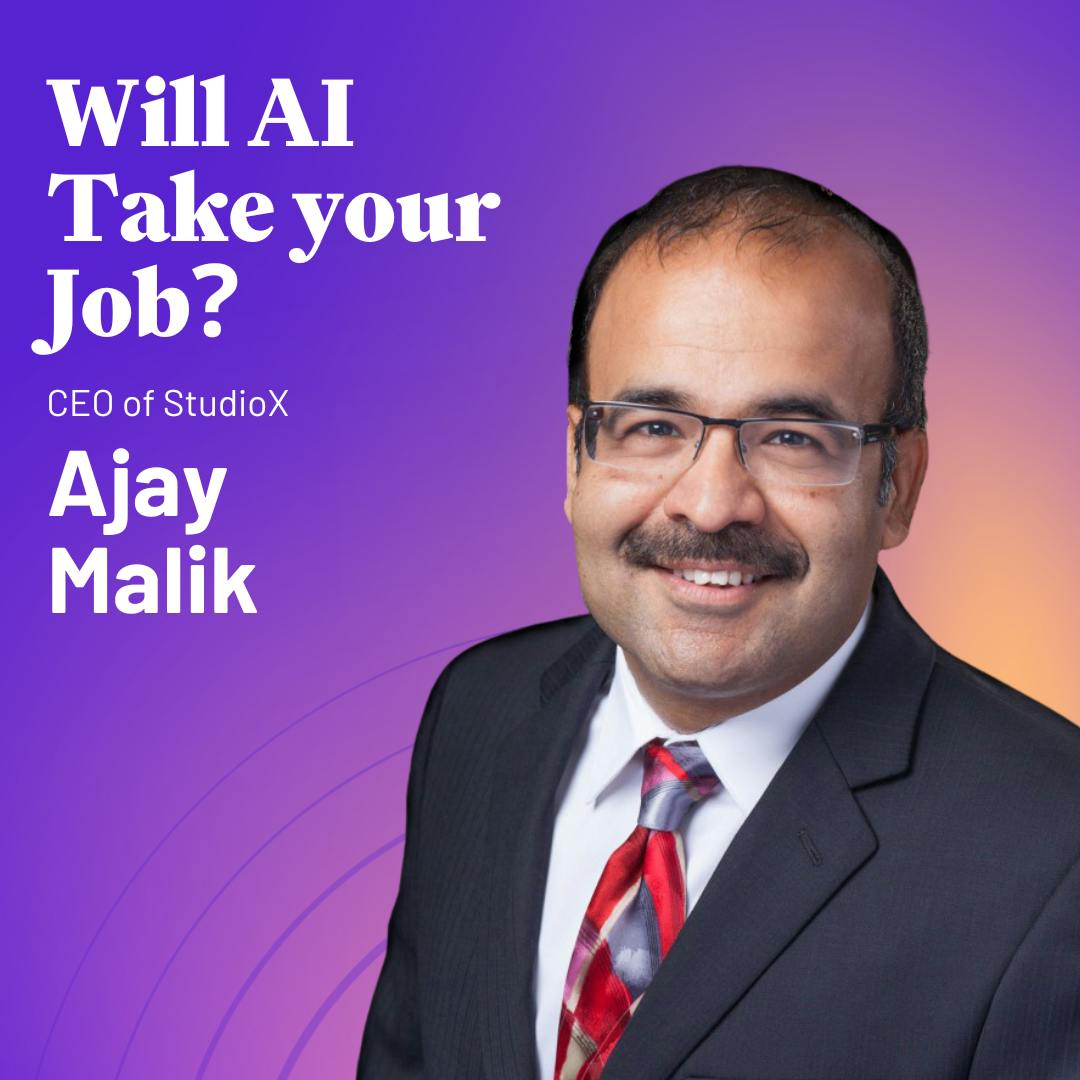


Let AI Do the Work: Becoming “Manager of One” in the Age of AI with Ajay Malik What if the future of work isn’t about replacing humans—but upgrading what we’re here to do? In this episode of Human Side Up, host Natasha Nuytten talks with Ajay Malik—CEO of StudioX-AI, former Head of Architecture & Engineering for Google’s worldwide corporate network, and holder of 100+ patents—about his mission to “let AI do the work so humans can do the thinking, feeling, and creating.” Ajay shares how his love for technology and his self-professed procrastination actually sharpen his ability to prioritize, focus, and build systems that quietly power billions of interactions behind the scenes. They dig into his core idea that every knowledge worker is now a “manager of one”—their own AI agent—and what that means for hiring, leadership, and personal responsibility. Ajay is refreshingly honest about the risks: AI will eliminate some jobs, especially for those who don’t learn it. But he also explains how the massive acceleration of innovation creates a new kind of demand for humans in the loop: orchestrators, conductors, project leaders, and ethical decision-makers who know how to direct AI, not just fear it. Along the way, he shares lessons from mentors, why doing one thing at 160% beats doing two things at 100%, and how AI is quietly teaching him to be more forgiving and more human. Highlights & Takeaways 💡 “Manager of one”: why every person now leads their own AI agent 💡 Human in the loop: 85% AI execution, 15% human oversight—and why that 15% is everything 💡 Job loss vs. velocity: how AI will cut some roles but create massive demand for new kinds of work 💡 Learning from AI: no grudges, no rumination, just next prompt—how that mindset can shape better leadership 💡 Everyone must learn AI (unless your job is literally with your hands): practical urgency for careers and companies Human Side Up What happens when we stop following the playbook and start writing our own? Hosted by Natasha Nuytten, CEO of CLARA, Human Side Up cuts through the noise to reveal how real leaders create workplaces—and lives—where people can thrive. Connect with Natasha: 🔗 LinkedIn 🎧 Spotify 📺 YouTube Connect with CLARA: 🔗 LinkedIn 🌐 Website 📺 YouTube
Test
Natasha Nuytten: Welcome back to the Human Side Up podcast where we explore the intersection of leadership, technology, and what it means to stay human in a world that's changing so damn fast. Today's guest, Ajay Malik, oh my God, I hope you get as much out of him as you possibly can. He's just a little joy bomb that gets dropped in your life. He is the CEO of Studio X AI and a self-described geek who spent his entire career building systems that work invisibly behind the scenes so that humans can actually shine. So from leading architecture and engineering at Google to founding three companies, really the most recent of which is Studio X, Ajay has always asked deeper questions and one in particular of what if AI could do the work so that people could do the thinking, the healing, the feeling, and the creating? He has over a hundred patents and is on a mission to really democratize AI across business workflows. Ajay isn't just building platforms, he's building philosophies. And in this conversation, we will talk about resilience of skills, adaptability, invisible sorts of leaderships. Who are the people who taught him things as he walked along the path to being where he is today and why the future of work isn't just about automation, but it's about amplification of humanity. So whether you're an engineer, founder, or just someone who's wondering how to keep your humanity in the age of machines, this episode is for you. Welcome to Human Side Up and I'm so excited today to have Ajay Malik on our podcast. He is pure joy in a smile. Look at this face. I was so excited. I was telling him as we were getting started that I was so excited today to know that I was going to have this little bright spot to look forward to. So thank you so much for being here. I'm excited to have this conversation with you.
Ajay Malik: Thank you for having me. Very excited to be here.
Natasha Nuytten: All right. One, how we kick things off around here is I ask a question of all of our guests, which is, what are two or three things about you, words that you would use to describe yourself that we might not see on your very impressive resume or CV, but who that have helped you become and land where you are? And when did you start to know those as true about yourself and embrace them as true?
Ajay Malik: Oh, you're looking for positive things, perhaps.
Natasha Nuytten: You can tell me what you want.
Ajay Malik: I am a very big procrastinator.
Natasha Nuytten: Note to self.
Ajay Malik: I always it's always somehow end up there and but it always I perform. I think I perform very well and I'm able to prioritize very well because of the delays I have introduced. Second thing you will not see on my resume or anywhere is. I am. I work very hard, but there is a cat. I love my work so much. I actually, honestly. I sometimes I worry and wonder that maybe I'm having too much fun and I need to work and it's so contradicting, like for the people, it seems like I'm working and I am feeling I need to work because I am like I sometimes feel I use the word, that word hedonism where you are just enjoying pleasure and like that. So I feel like that's all I'm doing.
Natasha Nuytten: That's amazing.
Ajay Malik: Yeah, it's very and people think I'm working so hard and I'm like, no, but they see me and they see me with my laptop and they think there's you and that's it. It is when my son says, oh, Papa, you are different. Most people don't like their work like this. Yeah. And so that thing and what else? And I. I like to learn a lot, I like to learn all tools, so like I have learned tools which I never have. I just learned them because I enjoy them like I am. I'm good at Adobe tools, they are like not one like I don't even ever need them. I don't even need to be good at Photoshop, Illustrator and all, but I'm very good at those because I just enjoy them. So
Natasha Nuytten: I love this. There's already a theme. It's a joy. It's finding things you like to do. That's great. So when did you realize that you were a procrastinator?
Ajay Malik: People tell you.
Natasha Nuytten: That's true.
Ajay Malik: Like I am packing for the last 30 minutes and my wife is preparing for the last two weeks. OK, and in the meetings we have a term where we use negative seconds, like when we are like the meeting has started and we are still finishing things. So we I think I don't even know. I probably don't remember a lot. I'm old, so I don't remember my childhood. So I have no idea what to think, but I think I have been like this for a long time now.
Natasha Nuytten: I appreciate that. And all the people around, you know it. So do they accommodate or do you make accommodations and plans or do they just accommodate you.
Ajay Malik: No, they sometimes are like, oh, they are getting stressed out. Sometimes they are very worried or oh, we should not do this next time. And that's how it is. That's
Natasha Nuytten: how it is. But I love that the other one is a balance to that is that you're just enjoying what you're doing. And that's such a gift. And I think that we spend a lot of time working on things that don't bring us joy or that we don't find pleasure in. Or we've lost it. Maybe we used to feel that way and we don't anymore. So I think the notion of people doing what they love is awesome.
Ajay Malik: So I think it's a true blessing. I tell you, I. I think I would be miserable in anything else. It's thank God,
Natasha Nuytten: I love it. So talk to us a little bit for those who don't know you, AJ, and they don't know that you have worked with some of the largest corporations and been responsible for some incredible tech that works behind the scenes to make their lives easier, which I want to talk a little bit about, too. What are you doing now? What is it that you are loving that is taking your time and energy, but bringing you joy? AI.
Ajay Malik: AI.
Natasha Nuytten: What about it?
Ajay Malik: We have built our own platform and ability to enable people to start using AI, and. So it's a cool product, it does good things, it's useful, but we are using AI so much so that is giving me so much pleasure and so much I am I. Honestly, a lot of times I burst into laughter sitting alone because I am interacting with AI and it is doing something so incredible or I learn like I'm learning from AI every day everybody talks about how I learned and how I will do this, that. But you know what? I'm learning like so many things, how to be a better human. For me, I like AI with no grudges, it just continues, no, does not dwell in the past like you made a mistake, move on next time, it doesn't say, oh, but you said this, so you said this, you said that. Nothing. AI is and even not just that, even like how I interact with AI when I'm dealing with AI, I am just like if it doesn't do well, I just start a new conversation or I laugh and prompt again. And but when I'm dealing with people, I am not like that. So I can be better when dealing with people, when I am so forgiving to AI and not as forgiving to people. So it's so interesting. You know what I'm saying? So I'm enjoying this, like it's such a learning every day in so many ways.
Natasha Nuytten: I love that. That's a whole book. You just gave us the whole outline for your next book. But I think you're totally right. I think it's very interesting that A, this is the worst AI is ever going to be. Like that notion is incredible because it's learning and teaching in this at this astronomical rate. I don't think anybody building this for the last 20, 30, 40 years had any idea that we would hit this inflection point where it was just going to go so freaking fast that people were not going to be able to even wrap their heads around it. And by the time they wrap their heads around what was happening today, it'd be different tomorrow. Nobody could have expected that.
Ajay Malik: No, nobody. You know what? All have seen major discoveries, major inventions. Whether it's the Internet, whether it's telephone, cell phone or whether it's refrigerator or microwave or airplane. Yeah. This thing is wow,
Natasha Nuytten: This is fire. As I know, the kids say fire is awesome. But I'm like, no, this is like actual fire changing the way the world literally works.
Ajay Malik: Literally it is and if you want to see it in a very negative way, it is like a witch just to like the power of AI. It's like everybody has an atom bomb in their hand. So if there is a huge negative use that is happening already in the world. And more potential. But there is so much positive also. It's actually, you know what you said, the word fire, it's actually the fire. It is very useful for cooking, heating and everything. And it's very bad. It can cause huge devastation. And exactly like that.
Natasha Nuytten: It's a tool. It's a tool that needs to be used by humans for better human things. I appreciate that. OK, so let's back up just a little bit. I'd like to say that you have often described yourself as a sort of lifelong geek who thrives on creating things. But creation isn't just technical. It's very emotional. It's very cultural. To the point of what you were just saying, like you're learning from technology. It's very human. And so when I think about how you grew up and where you grew up in a very different time and space than where we are now, I'm curious if as you look back on those years before Google, before you were doing this stuff with Studio X, what experiences did you have or mentors did you have who most shaped the way that you think about leadership and the responsibility that technology can have in people's lives? And maybe it. And maybe it wasn't that they were teaching you that, but they were teaching you because they didn't know yet that you needed to be prepared for this world. No. I am teaching you about humanity and in your leadership or your work.
Ajay Malik: I think if you say it OK, I will tell you, OK, I am a blessed person. OK, I am like I have gotten. Thank God, that's all I can say, everything. OK, and God or universe, thank universe or whatever. It is so much helping me, protecting me, giving me direction. It's unbelievable. OK, and I can tell you from the starting point. When I was in school, India had entrance exams and you had to figure out what you would do and you did the entrance exam and then I got a good rank and it was like, OK, my father. I checked around what my son should do now, what field he should do right now, he wants to be an engineer, but what should he do? Civil engineer, mechanical and then people advised him that he should do computer science. It's an upcoming field and it will be very well for him long term. And he got good advice. Here and I was like, OK, and I moved in that and then, the whole career, if you think career is so random, it's like the bosses you get, the companies you work, the projects you do, your teammates in each project, it's all random, completely random from one to another. And I have been so lucky, my bosses, like since you said mentors, my bosses, actually the one thing I really want to write about is. Oh, thank God to my bosses. OK, and I have a lot of jobs also, so I have so many bosses, but they were all good. My first boss, his name was Madhuresh, he was in India, he's still here and so good. And every boss I can go like my boss in Bay Network, Jane Lee, she was so good. My boss in Bay Networks, we had Basil Alwan, so good. My boss in Motorola, Sujay Hajela, Anthony Bartolo. OK, every boss in Google, my boss, Kamran Shastani Zadeh. Oh, my God. I have learned so much about caring people, about how you should do with your people, how you should treat them, how they react to things, how you. They were all better humans, honestly, and that better humans, better managers, whatever you so I learned so much from them. To me, I am like trying to copy, still copy, like I had a boss, Jamie Lerner and in Cisco and one day he says he's teaching me and they're all guiding you. I did. You don't have to answer like this. You know what? In such meetings, you can always at any time. You know what? Just make it a rule. You know what you tell them? Give it 24 hours. If then I will get back. Even if you have already made a decision. But you know what? OK, I learned how to do this. So that at least other people get the satisfaction of that. I have thought it through. Otherwise, sometimes people may not feel good about that, that you took this too fast or whatever, but you learn small things and big things. I like. Hundred percent is what I have observed and seen and learned, and it is good like Kamran in Google, he used to talk to me all the time and, general conversation and work conversations and non-work conversation. And one day he was explaining, Ajay, life is so random, you know what? You are going in the car and I would see I'm in this side of the car. I have so much money and everything. And on the other side, there is somebody homeless, just three millimeter glass. And that person has nothing. And the only reason is randomly where the person was born and what it is. And I am where and why this person is there has nothing to do with who I am. It's just a random sequence. So you have to always count your blessings. It is. And you know what? So it's that's the thing. Working with so many bosses, good bosses, good people and good projects and all has made my career, whatever it is.
Natasha Nuytten: I love that because our career really is the sum of our experiences. And what we bring to the table is a piece of it. And it's so valuable that it can be made or broken by the person on the other side of the table, seeing in you what you bring to the table or not taking the time to see in you what they bring to the table. And so one of these lines I'm hearing or one of these through lines I'm hearing as you're talking about. These bosses that you've had, because I was going to ask you, what does good mean? And then you start talking about the simple examples that they've given you or the way that they have given you a piece of advice or something to work on that was really tangible that changed how you were perceived in the room.
Ajay Malik: A hundred percent.
Natasha Nuytten: Yeah. And so that the growth comes from not only how you show up, but that they are willing to see the thing in you and invest in that thing that's in you.
Ajay Malik: A hundred percent. I will give you one more example. I was working in the symbol technologies and. I was doing one project and it was going well, and then another big project started and. Our general manager decided that somebody else will lead that project, and I was like, oh, why did not give it to me, I could have done that and all those things, right? Then my boss, Amandeep Sambhi, he was like. He had a meeting like he had a meeting with me and Ajay. He said, I know you are very upset because you did not get the second big project happening in that company, but you have a big one. And he says, you know what? I know you work hard, so you will be able to do both projects. I want you to think like this. You will do both projects. Each project you will put in. 100 percent of the time, you will work 200 percent and then you will still put 100 percent time on both and you will do both projects well. Instead, I want you to think like this on the first project which you have. I want you to do 160 percent, do more than what you would have done, go further. You will be still less than 200 percent and the impact you will make on that project will be 160 percent at the end. In the first area, you will do both projects 100 percent each. I was like. Something a very interesting way to explain and like how and I said, OK, and I will do this, OK, because it clicked to me that I can put more energy, more effort and make it more successful. And we did. I made it more. I did more song and dance around the project, more everything. And in fact, we delivered the project a month before it was supposed to finish. Even the customer was very super duper happy. They gave the whole team a. I don't remember the first time like this customer was with me and they actually gave the whole team. We had a team of about 60 people and they threw a party in a Cheesecake Factory or something. They just came like you are doing. You guys are so good. And that project went so well, established me. In fact, I got promotions and moved further, so he guided me and he gave me the right direction.
Natasha Nuytten: Yeah, that's so that's such a great example, because especially when someone is thinking about. How do I become a better leader? Almost always their game plan has to do with doing more, having more responsibilities, not doing better with the ones that I have, I think that's a really interesting perspective.
Ajay Malik: Yes, it is. And it always works. It's a very good way of. Thinking, yeah.
Ajay Malik: She did this permanently in my life. That it's not about doing 10 things, 20 things, it's about doing the five things super well. Who matters. And it makes you, yeah, magic.
Natasha Nuytten: It is, it's, focus is somehow magical and yet we can be very easily distracted. So I absolutely love that. I'm gonna be thinking about that myself for the foreseeable future here. Yes. So one of the things, when you were at Google, you were entrusted with designing and engineering, worldwide corporate networks, right? An infrastructure that served millions of people really rather seamlessly. That was the objective, right? And I'm curious about how you walked into that project, thinking I can give 160%, because I anticipate, I expect that you have done every single project you've ever done since then at 160%. But I'm curious in thinking about that, serving such a broad global audience and being so intentional about keeping human beings at the center of everything that you do, how in that project or in the project since have you really thought about your perspective on quality and sort of inclusion in thinking about people that you're serving and how, because they're such disparate end users, there is no, there's not always a single ICP that you're trying to, trying to serve. So how do you think about that sort of diversity of the people you're serving as you're really coming down to what is best for the whole?
Ajay Malik: So good question, very interesting, okay? And I think this is where I, this is where I got hooked into AI. And this is how it got connected, all the dots got connected, okay? Because, and in fact, it was not even called AI as much. We were using it and we would use the terms models and techniques and everything, but AI was not really a buzzword, okay? And people would not even understand. And internally, we treat them as software, okay? And the key thing was two things, which were the AI part. One was personalized experience, understanding how we are using it and giving you back the experience the same way and keep giving you what you want. Prioritize, personalize the experience exactly how you use it to learn from your behavior. So give a very individual experience to each person. That is where I got connected with AI. That was the whole experience. Learning that AI can be used for personalized experience and making sure that each person gets the experience, learn from their behavior, learn from their patterns and provide that. And the other part was look at the whole network and forecast how the network, what will be the needs of network because how it is growing, we have to provide because the experience is also a very important part of experience in network is capacity and latency. So will the network be able to handle everything as people grow? And if this is the pattern of growth, right? For example, in 2015, the network traffic doubled in six months, okay? Think like this. So things are happening, right? So the more you have forecast. So this is where I got hooked into AI learning and AI was the driver to learn and provide what you want, what you expect and long-term continuously because it takes time. You cannot just go and add new servers or switches or routers in a day. It takes time. So you have to have planning, but you don't do planning just like the old world planning. Hey, let's buy a network which is eight times the capacity of what we need and then we will go with that, right? You project it, figure it out and personalize experience how you use it, right? And how do you even think about the simple things, like you suppose you are using Wi-Fi, you are using Wi-Fi at home. Your family's using it. So many things going on. Everybody's connected using devices. So everybody expects a different outcome from the network. The person gaming is expecting a very low latency so that they can play their games fast. The person watching TV is in a different mood. The person who is just doing emails is something different. Everything. And if the more personalized experience you get and more projection around the capacity, that's what we started doing and that's how we were able to provide a good plan and provide good service.
Natasha Nuytten: So as you were thinking about that and making the leap from being in a leadership position at Google and moving into starting Studio X and doing your own thing, that's different, right? Being a leader in an organization that is well-funded, well-respected, well-known, has a bunch of infrastructure, it has resources you can draw upon, is very different from starting up your own shop and starting all over. So what was it that was the catalyst for you to say, yeah, I can't not do this. I have got to go do this thing.
Ajay Malik: First of all, this is my third startup. I enjoy it. Because I enjoy the enjoyment of working, I like the freedom that comes when you are working on your own, okay? Those sayings, right? Hey, I quit a 40 hour a week job so that I could do 120 hours a week myself. And that is true. And I enjoy it, so to me, having that freedom, having that, I can make my decisions right or wrong and do whatever, right? That is so important. So I always tend in that direction. I do big companies, I have done that, right? Who knows what I will do in future, right? But I like both. I enjoy the corporate big world where you have a tremendous amount of money, a $180 million budget, and it's good. And then I also enjoy that, hey, we are thinking, should we take this $100 per month subscription? That's it. That's it. But I think there is something about the freedom of, I think the degrees of freedom that you get when you are on your own, I don't think you can beat it.
Natasha Nuytten: Yeah, there's something there.
Ajay Malik: Although a lot of companies, they have worked their groups like startup inside the groups, so they are fun. So I think you can have good fun in corporate also. So I think-
Natasha Nuytten: I think you have fun wherever you are. I don't know if we can just align that with business, but I'm very curious. So when you think about it, because you are so human first and thinking about your leadership style and the products that you deliver, your current project, Studio X, is really about letting AI do the work. Like you really lead with that as a notion, right? So in doing so, I think there's a real, I'd like to get your take on this. Please tell me if I'm wrong and where I'm wrong. I think that because technology is able to do so many things, our initial fear is that it's gonna take my job or I'm gonna become redundant. But I look at it and think, maybe, yes, like some things are gonna go away, but what it opens up is this space for us to be so creative around things we never even had time to think that we might be able to do because we were busy doing the things that technology is doing. So that creativity that we were talking about on the front end of things, I'm curious if when you were talking about you're learning from AI and it's helping you become a better human, right? When we think about what people are going to be able to do with technology as they are enabled by AI doing pieces of their job, where do you see that in your industry? We'll stick with engineering, we'll stick with, or if you wanna go someplace else, you can. What do you think we're suddenly gonna be able to do that we didn't even know we could open up? Like where's the creativity gonna come in engineering? Where's the creativity gonna come in these very traditional kinds of roles?
Ajay Malik: I think creativity, the Jurassic Park movie, life finds its way.
Natasha Nuytten: Life finds a way.
Ajay Malik: I think creativity finds a way. Yeah. Okay. Although I would say that, right? Everybody doesn't want to be creative. Everybody, so there is a challenge in which world we'll see, okay? Even if we are trying to sugarcoat it, right? That jobs will get created in other ways or people will be able to do a lot of things. I think we will see a lot of job loss. We will see tremendous job loss, okay? Because a lot of people, you know what, here is the thing. About 2 billion people still don't even have the world. So you know what? So think about those people. They are not learning AI soon. They will be just, many of them will just get replaced by AI without even knowing what hit them, okay? So it is, there is a bit of sadness that's about to happen, okay? How fast, how soon, but it is, and it's not like this. It will not create as many jobs as it will eliminate. That's also a fact, okay? Sad facts, okay? However, what will happen? And I think that is the thing that will actually protect the world. And that thing is, because there is AI, so the velocity or acceleration of innovation or the roadmaps, what you can do, right? You don't need to do a three-year project. That project can be done in six months. That project can be done in three months. That project can be done in three weeks, three days, three hours, right? What that will do is it will create an effect where people are moving so much fast. To control that or to keep up with that momentum of being able to deliver, we will need people to control it. And so there will be a lot more project managers, a lot more salespeople, a lot more marketing people, even though we will be using AI, but there will be the human in the loop, which will be like 15%, 85% will be done by AI. But that 15%, but we need so much of 15%. So if you think the work velocity is more than six times, what that means is you will need the same one marketing person for that much velocity. So you can't eliminate the work. And then if, like what we feel in our own company, the productivity has gone up 25 times. We can produce things 25 times faster. If we can do that much, what that means is the people we need for sales, marketing, support, testing, all other things, even if they are using AI, because they are still 15% human in the loop, you need so many of them. And that's what will happen, okay? I really believe that we will lose jobs, but because of the velocity, acceleration, we will have so much to do that will create it. And the human in the loop is not going away. And what that means is that the human in the loop is the one which is being created, which is the one. So you know what I'm saying, like the other day, I wrote an article and it was about software engineers who will not be like the traditional software engineers. They will be more like, learn from a symphony orchestra where the conductor is doing it. And then you have a bunch of AI agents coding for you, doing things for you, but you need that good skill. Creativity will come because now you are creative and you have tons of agents working for you. So two and a half years back, I told my team, everybody is now, every individual in our company is now a manager of one, at least one, and that's the AI. Nobody should think that AI is another engineer. AI is your engineer. Use it and do your job better and well. Skill is not the differentiator. You have the AI who has the skill. So you need to figure out how to get things done, what to do, wherever AI goes wrong, you protect it, you think better. That's how creativity is coming now. You think, yeah.
Natasha Nuytten: I really like that perspective on everyone is, a manager of one, because I think that a lot of times as right now, as organizations are trying to figure out how to bring AI into their companies, they really struggle because people don't know what the expectations are, right? And their bosses don't know what the expectations are. So nobody knows what they're supposed to be doing. So this idea that you are a manager of one, you're responsible for the outputs of this thing, you are responsible for how it goes about doing its work and what it delivers, I think it's a really interesting perspective. And I think that it's becoming more and more important that we look at not the traditional skill sets either, but that we look at things like people's ability to learn and their ability to connect dots between seemingly disparate ideas or notions and to take on new technologies and to be able to think through resilience, right? And being able to pivot in an organization. I think being able to think through those things and looking for those types of skills in our teams are gonna, it's gonna matter, right? We're gonna hire differently because-
Ajay Malik: 100%, 100%. And that is the key. And you know what? And people, and this is why it's so hard to predict how much creativity or where, but because now those people, humans in the loop have a role where they are using a lot of AI. You know what? They will learn from how AI is doing and they will figure out how they are doing wrong and how they can do better and they will use them. And then what else can I do? It will just open up the creativity. It will just open up. We don't even have to force it. It's because it's like this, you know what? I don't know if people still say that, but my mother would be like, hey, you have to hang in the school, hang around with the smarter kids, always. Because you always want to hang around with the ones who are doing well, always, right? And she would push for that. And if you're not hanging out in the wrong group she's okay, that's not good, okay? And that's the key, I think. And when you hang around with a bunch of smart AI agents, I think we will become very smart.
Natasha Nuytten: I like it a little smarter, I like it. So what keeps you up at night about AI?
Ajay Malik: About AI? Yeah. I know that it is being abused, the wrong people will use it. That is the thing, I think, you know what? Today I'm sitting with you like this, six months, then maybe you may think you're talking to me, but it will be my just AI incarnation doing your podcast. I have that and it does very well. So you will not even know I can replace it and suddenly you are like, wow. And that's the thing, that is the thing that there will be a, what do you say? People will do things which we, which will do, people will do bad things using AI. Yeah, they will. And people will control it because AI is like something. Some big country leaders, big people who have capacity or capability to control it, will try to control it. That's the fear.
Natasha Nuytten: So how do we mitigate that?
Ajay Malik: There is no mitigation, just continue. Use it, become an expert in AI and be smart so that, you know what, that's how it is. Like, how do you mitigate spam calls? There's so much happening, right? Emails, you can create some processes around it and you work around it, right? And I think we have to be good. And you know what? The world works because the majority is still good.
Natasha Nuytten: That's true. We have to, the good folks have to link arms together so we can. Yes, that's how it works. We can do the thing, yeah. It's absolutely true. So how can the folks who have been listening here today be helpful to you?
Ajay Malik: How can people be helpful to you?
Natasha Nuytten: Yeah.
Ajay Malik: I think everybody who is not using AI unless they are in a physical work profession, like they're cooking or haircutting or some professions, nursing, right? I think unless your profession uses your hands, literally and that's like, and I don't use much hands now because I tell the AI and then AI is coding and I'm sitting like this, right? Unless your profession is physical labor, you have to start using AI. Otherwise you will not be useful for me or anyone. You have to learn how to use AI, how to do your job better, how to be more efficient, how to be more quality, how to be everything. You can be everything using AI. So I think everybody has to learn AI. That is the first thing. But if they are, then here is the thing. We need conductors. We need people who can use AI. We need those people because they can be amazing project managers, program managers, even coders. They don't have to have the skillset because they can use it. It's like having a team. As I said, manager of one, it works. You can have, and this is a powerful one, okay? And you can have multiple conversations going at the same time. You could be talking to GPT, Gemini, Cloud, Rock, all at the same time, right? And having, using them. So that thing, people have to be efficient and proficient in AI, using AI. And I think then they can be useful for everybody. And we will see so many people make so much money because of that.
Natasha Nuytten: Yeah. Okay. What have I not asked you today that I should have asked you? Or is there something you'd like to leave us with as a gift from you?
Ajay Malik: Gift from me? I would say if they are thinking, worried about AI, or worried about their job loss, or they are like, oh, I don't have time. How do I deal with it? And how do I learn this now? Or how do I, what do I do, right? Or my career is getting stagnated or whatever, you're stressed. Feel free to schedule a meeting with me. I have time because I use AI. So I do have time for talking. So I can talk to you and reach out to me on LinkedIn for 30 minutes, my link, and I will schedule some time with me.
Natasha Nuytten: I love it. I love it. I don't have time now because I use AI. That's fantastic. Thank you so very much for sharing all of your experience with us today. There were 47 different directions we could have gone with this conversation because of your experience and all of the contributions that you have made to the world of tech and continue to make. So thank you for all that you're doing and encouraging us all to do our part as well.
Ajay Malik: Very nice. Very nice. Thank you. It was good talking to you.
Natasha Nuytten: Thank you. All right, everyone. I hope that brought as much joy to your day as it did to mine. Like just a 10X. Ajay is just a sweet human and so smart, brilliant.
Natasha Nuytten: I wanted to ask him 16 more questions. I really wanted to dive into the notion of ethical AI, and so maybe I'll get to do that on another podcast or in real life one of these days. But in the meantime, he did express to you how you can reach out and support him and his work, and he likes chatting with people. So we'll put his contact information and his LinkedIn bio in the show notes, and I do encourage you to reach out to him and thank him for everything he has contributed to our world, which is tech that works behind the scenes that we don't see, and the stuff that he's doing now with AI. So thank you so much for listening. I look forward to catching up with you all again soon. If you have questions for us, reach out. Otherwise, I will see you again soon, and in the meantime, keep the Human Side Up.


